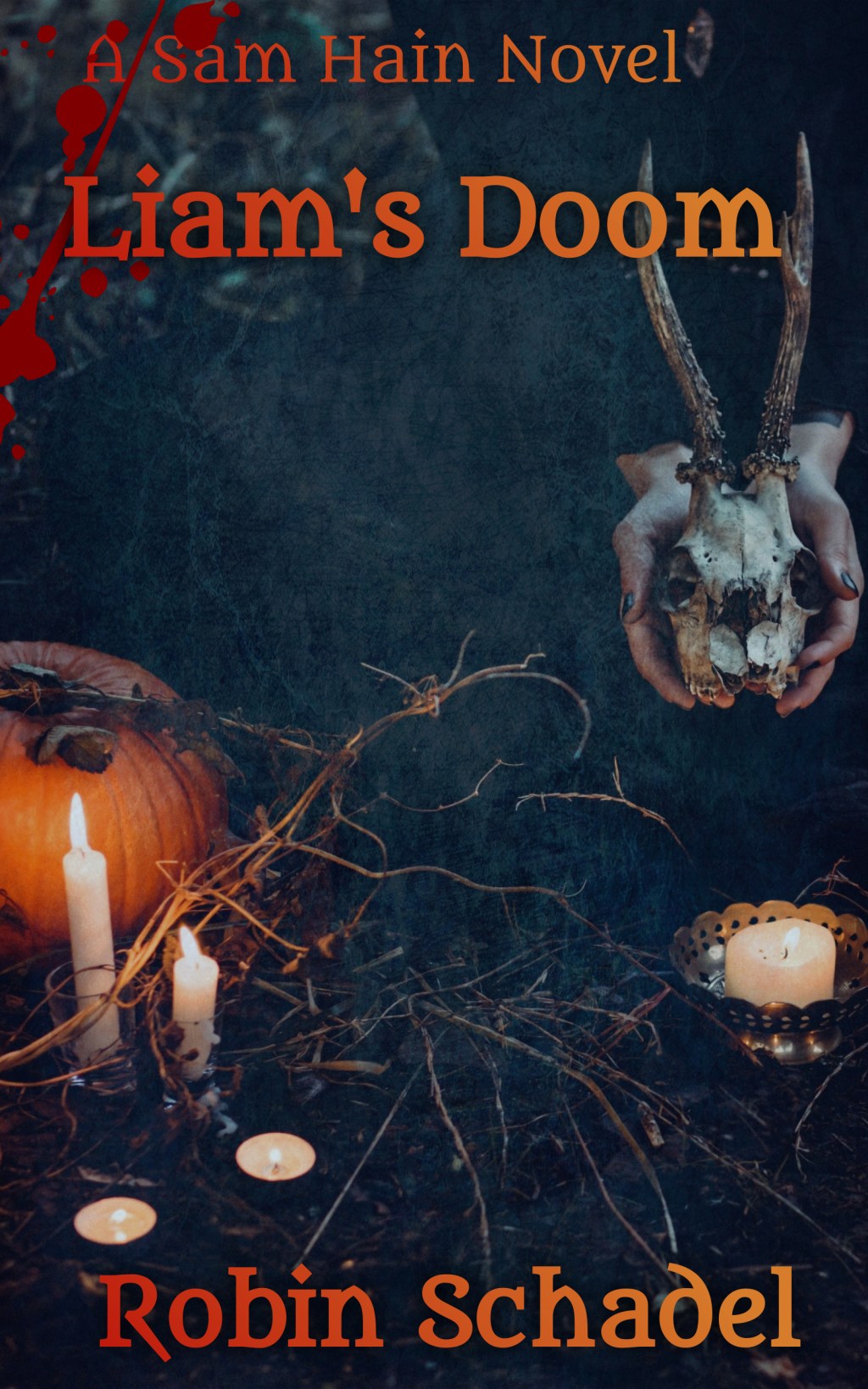
Back in 2020 as I was thinking about and drafting Liam’s Doom, I prepped and “planned” my novel the same way I prepped for a D&D session. I think you can already see the hubris there, right? I had my characters and my NPCs fleshed out. I had the setting prepped with all the locations that Samantha Hain might explore on her way to Ireland and even thoughts of what Faerie would look like when she ventured there. I had the inciting incident/plot hook fleshed out, and I thought it was pretty interesting: A young girl films a banshee singing and uploads it to social media, thus drawing the attention of a group of Watchers who want to keep secret the fact that we share a world with supernatural beings (and they’re willing to kill in order to do that). Oh, and the girl has gone missing.
I planned out the major scenes in each chapter by writing key phrases of who, where, and what needed to happen. I planned how the investigation would go, what information would emerge at each step, when complications and red herrings would arise and how they would impact the progress. I planned all of that but kept it open enough so I could move around as Sam’s spirit guided me. But there was one thing I did not plan: the resolution. I didn’t plan how Sam was going to actually solve the case. I actually penned the words “I’ll figure this out when I get there” into my planning notebook.
And then I got there…and I had no idea. I figured out an ending that I’m happy-ish with, that my beta readers and editor were happy with, and that readers enjoyed. But it required a LOT of revising the manuscript so everything foreshadowed and built to that conclusion.
Planning a novel and prepping for a D&D session are not the same thing. When prepping for D&D, all I have to do is prep a scenario. How that scenario gets solved is up to my players to determine. When planning a novel, I actually have to figure out how the main character and/or the supporting cast will solve the problem put forth in the inciting incident. And I spent a good three weeks figuring out a workable solution.
And that’s when I made the decision: future books I write will have a detailed, point by point outline of each chapter. At the very least, my outlines are broken down by acts (I use a 3 Act structure), chapters, and scenes. For each scene, I discuss major characters involved, location, the scene’s purpose, and the connection to other plot lines within the book and throughout the series. For me, a lot of planning up front makes for less work at the end. I spend less time editing for consistency and for structure. I spend less time trying to figure out the “what comes next” queries.
But, just because I’m a plotter doesn’t mean I don’t let new ideas change the story. If I get an idea for a scene or a scene change that intrigues me, I weight it against the outline. What else will need changing? How much of the plot will have to change? Will anything change? Is this idea really just filler that I find interesting? Based on my answers to these questions, I may/not write the scene idea at all. I may also put it in a file for later use in another novel. That’s happened a few times.
But this is how I learned I have to plot in detail. Hi, my name is Robin Schadel, and I’m a plotter.
Interested?
Click the following links to purchase the paperback from all online retailers, including Amazon, Barnes & Noble, and Bookshop.org (which supports small bookstores).
Click the following link to purchase the eBook from Amazon for all Kindle devices for $0.99
 cursingravenbooks.com